
HVAC Contractor in Lexington, KY — Diagnostic Discipline, Honest Pricing
Two homes a mile apart in Lexington can need entirely different HVAC work. The 1925 brick four-square in Ashland Park with gravity-furnace-conversion ductwork has different sizing math, different distribution problems, and different code considerations than the 2018 build in Andover with tightly sealed envelope and current-period equipment. A contractor who treats them the same gets one of them wrong — usually by oversizing the equipment, mismatching the refrigerant, or skipping the commissioning measurements that determine whether the installation actually performs to specification for the next two decades. We do the diagnostic work first, the measurements first, the math first — and the itemized quote follows what we found, not the other way around.
What We Do
Residential and light commercial HVAC across Lexington and Fayette County, plus Nicholasville, Versailles, Georgetown, Wilmore, and Midway. Cooling and heating service, installation, replacement. Indoor air quality work that’s honest about what actually moves the needle versus what’s industry upsell. Emergency dispatch when the situation warrants it — and honest triage when it doesn’t. Commercial work scaled appropriately to the building’s operational profile. Maintenance plans that fit your equipment and runtime rather than the most expensive tier we can sell you.
What every job has in common: we measure with calibrated equipment, we document what we find, we walk you through the math before we quote the work, and we pull permits where the work requires them.
Cooling: AC Repair, Installation, and Service
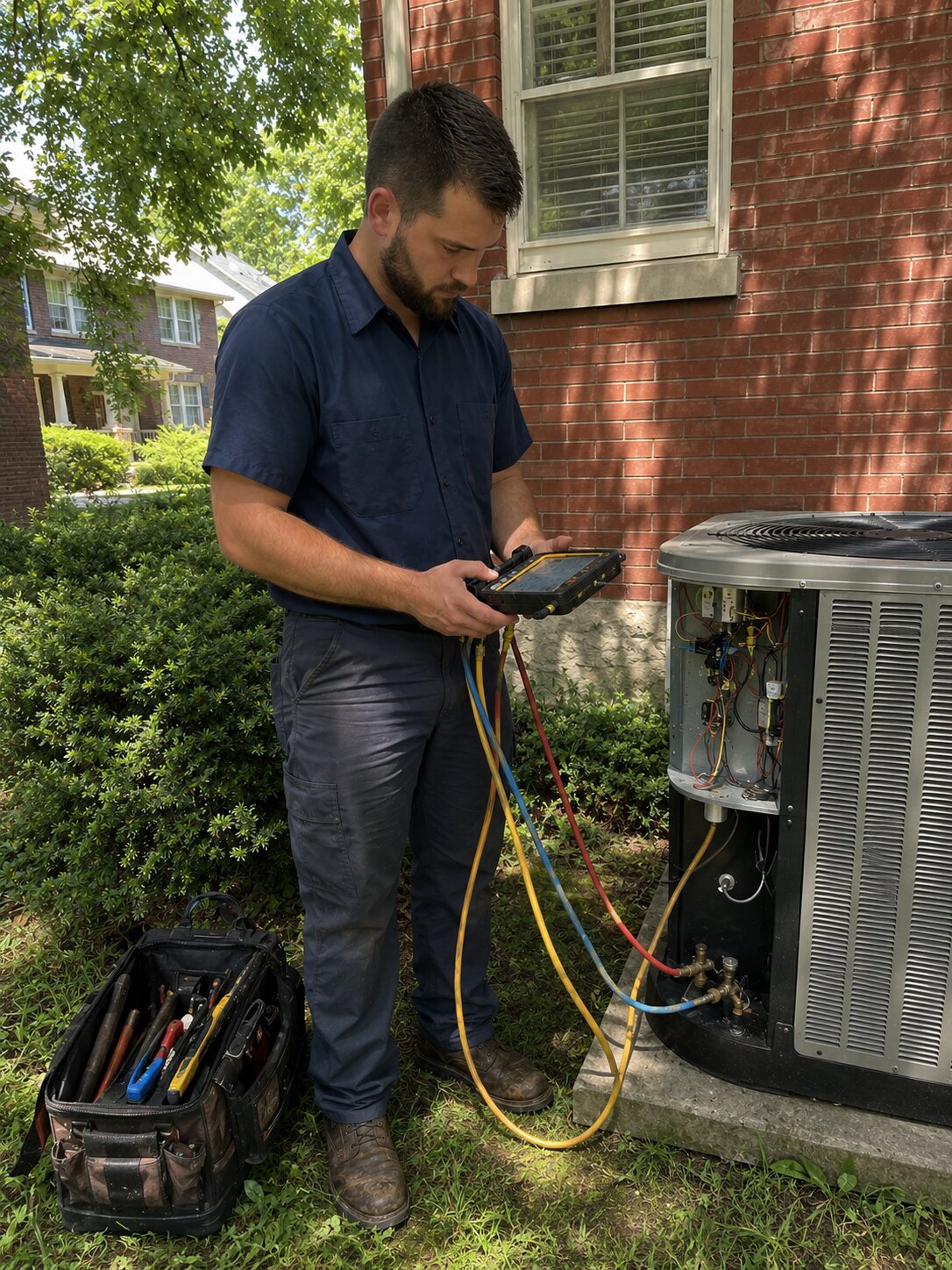
By the third week of June in any normal Lexington summer, the queue stacks up. Capacitors that measured slightly low at last fall’s tune-up but didn’t fail completely. Condensate drains clogged with the year’s worth of biological and mineral buildup. Refrigerant leaks that developed slowly over the previous winter and finally produced symptoms when the system ran continuously through the first heat wave. We work through each diagnosis with calibrated equipment rather than guessing.
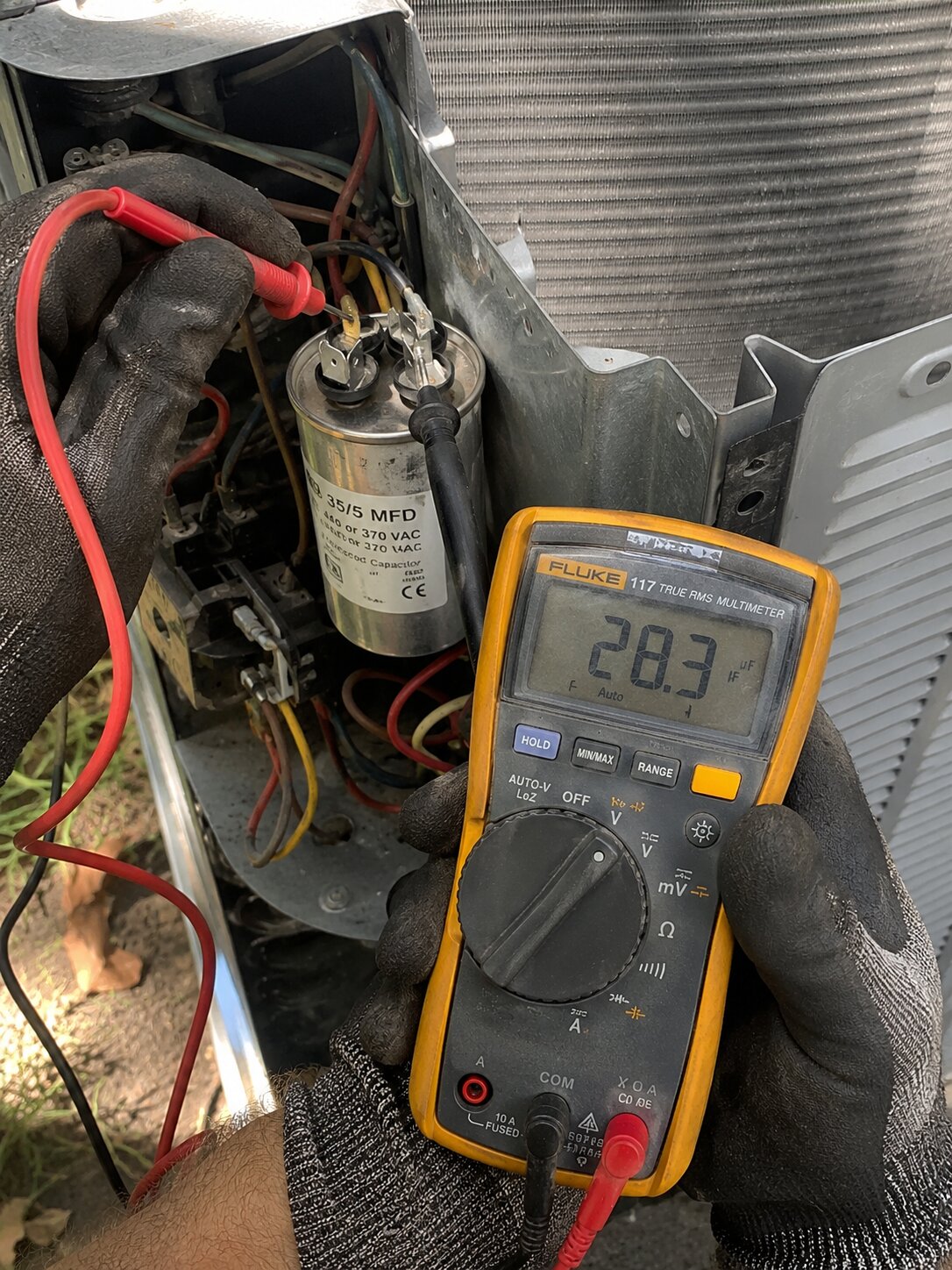
A capacitor reading 28 microfarads on a 35-rated label is a $35 part and a 20-minute repair. A failed evaporator coil from formicary corrosion is a several-hour repair plus parts. A frozen coil from restricted airflow needs root-cause diagnosis rather than just thawing. The symptom — “running but not cooling” — is the same across all three failure modes. The diagnostic work is what tells the difference. Without that work, every call ends in the most expensive quote the contractor can justify.
For replacement decisions, the math runs first. Manual J load calculation for your specific home rather than rule-of-thumb sizing. Equipment tier comparison with the actual operating-cost math, not just first-cost pricing. R-454B refrigerant on new installations per the 2025 EPA standard. Section 25C tax credit handled with the documentation your tax professional needs.
Heating: Furnace and Heat Pump Service
Central Kentucky’s winter design temperature sits at 6 to 10°F. Most years the heating system runs from late October through early April; some years it cycles into May. Equipment that’s marginal during the shoulder seasons fails when the first sustained cold snap arrives, which is also when every contractor in town has the queue stacked deepest. We field the calls on the 11 p.m. 14°F January nights, and we diagnose with combustion analysis rather than guessing.
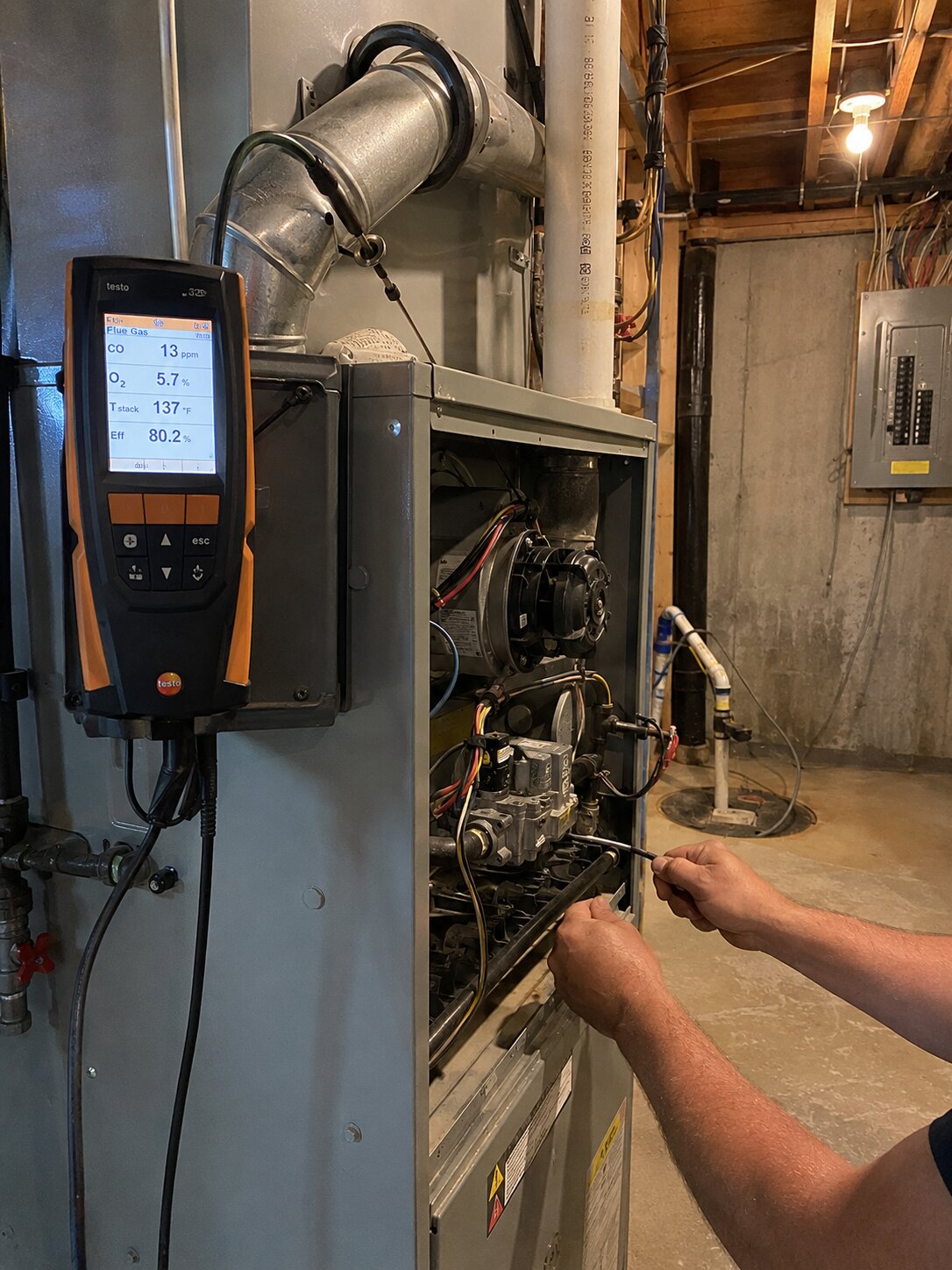
A furnace running with O₂ outside specification wastes fuel, increases emissions, and accelerates heat exchanger wear without any obvious symptom to the homeowner. A furnace with manifold gas pressure not matching the nameplate produces less heat than rated. None of this is visible from across the room; all of it determines whether the equipment runs to specification for two decades or struggles for fifteen years while no one notices why. Documented combustion analysis at startup is the difference.
On cracked heat exchanger diagnoses specifically: we show the evidence. Borescope photographs, supply-air CO readings, pressure differential data — the documentation that distinguishes a real condemnation from a contractor-incentive guess. Real cracked heat exchangers exist and do require replacement. The category is over-diagnosed because the replacement sale is large and the verification is hard without good equipment. If your previous contractor said you needed a new furnace and didn’t show you the photographs and measurements, get a second opinion.
Indoor Air Quality: Honest About What Works
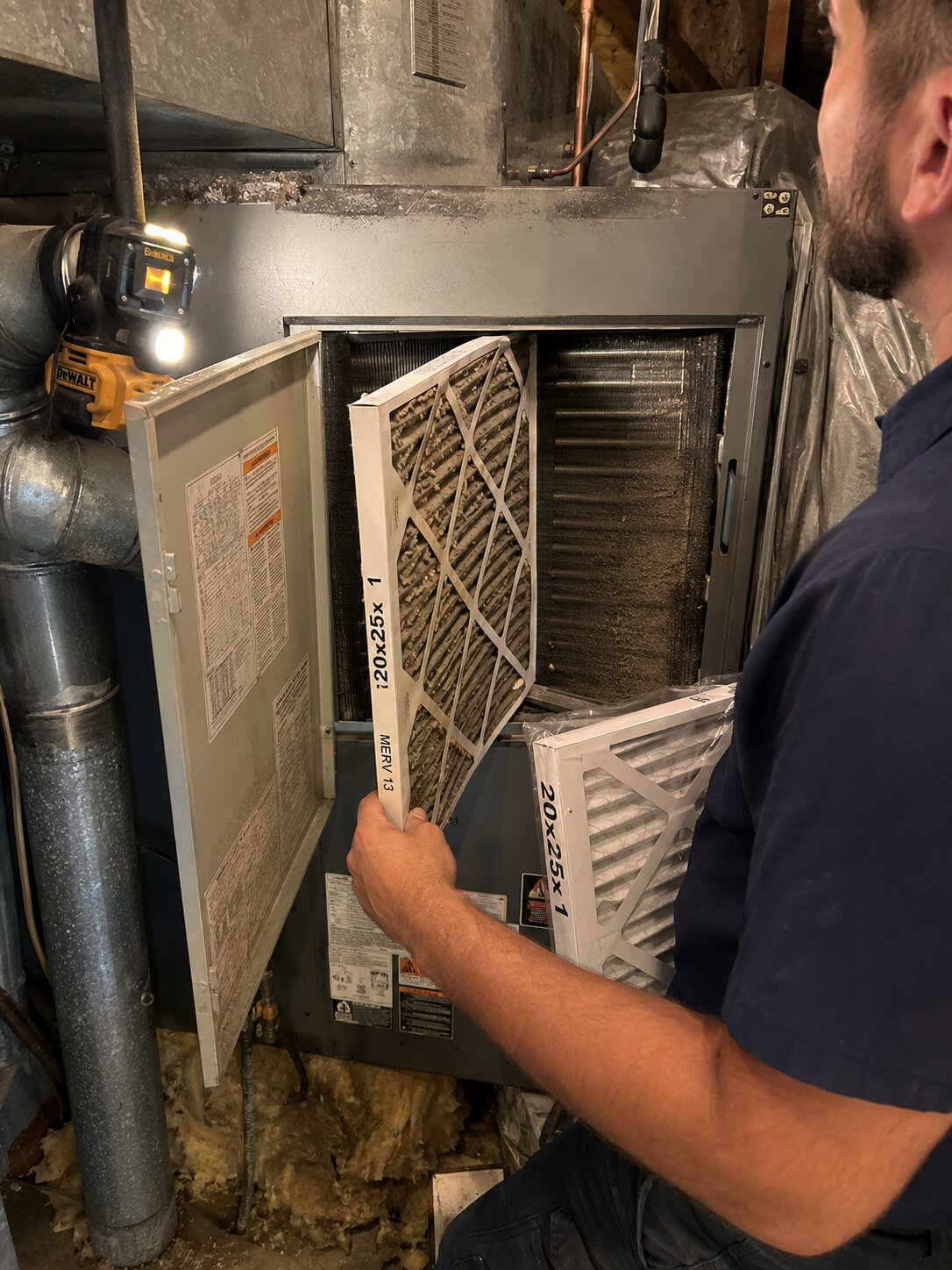
The indoor air quality category contains both genuinely useful interventions and substantial industry upsell. We’re honest about which is which. A clogged filter restricting airflow is a real problem with real consequences for both comfort and equipment life. A whole-house humidifier in a tightly built newer home during Lexington winters can resolve real dryness issues. A properly sized dehumidifier in a basement applications can address moisture problems that drive both comfort and mold-growth concerns.
What we’re cautious about: duct cleaning where the existing system doesn’t actually need it, UV light systems sold with inflated mold-and-bacteria claims, ionization and PCO devices whose effectiveness evidence is weaker than the marketing suggests. We’ll discuss any of these honestly if you’re interested, including what the actual research says rather than what the sales literature claims. Carbon monoxide testing and detection — that one we lean into. The CDC tracks more than 400 unintentional non-fire CO deaths per year in the United States, and the testing protocols are well-established. We’ll do that work with calibrated equipment.
The Diagnostic Discipline
The single thing that separates good HVAC work from bad HVAC work isn’t the brand of equipment, isn’t the size of the company, and isn’t the price. It’s whether the contractor measures before they recommend. A Manual J load calculation takes time. A combustion analysis takes calibrated equipment and someone who knows how to read it. A refrigerant pressure measurement against design specifications requires gauges and the discipline to compare the readings against the manufacturer’s chart rather than just topping off until the system seems to be working again.
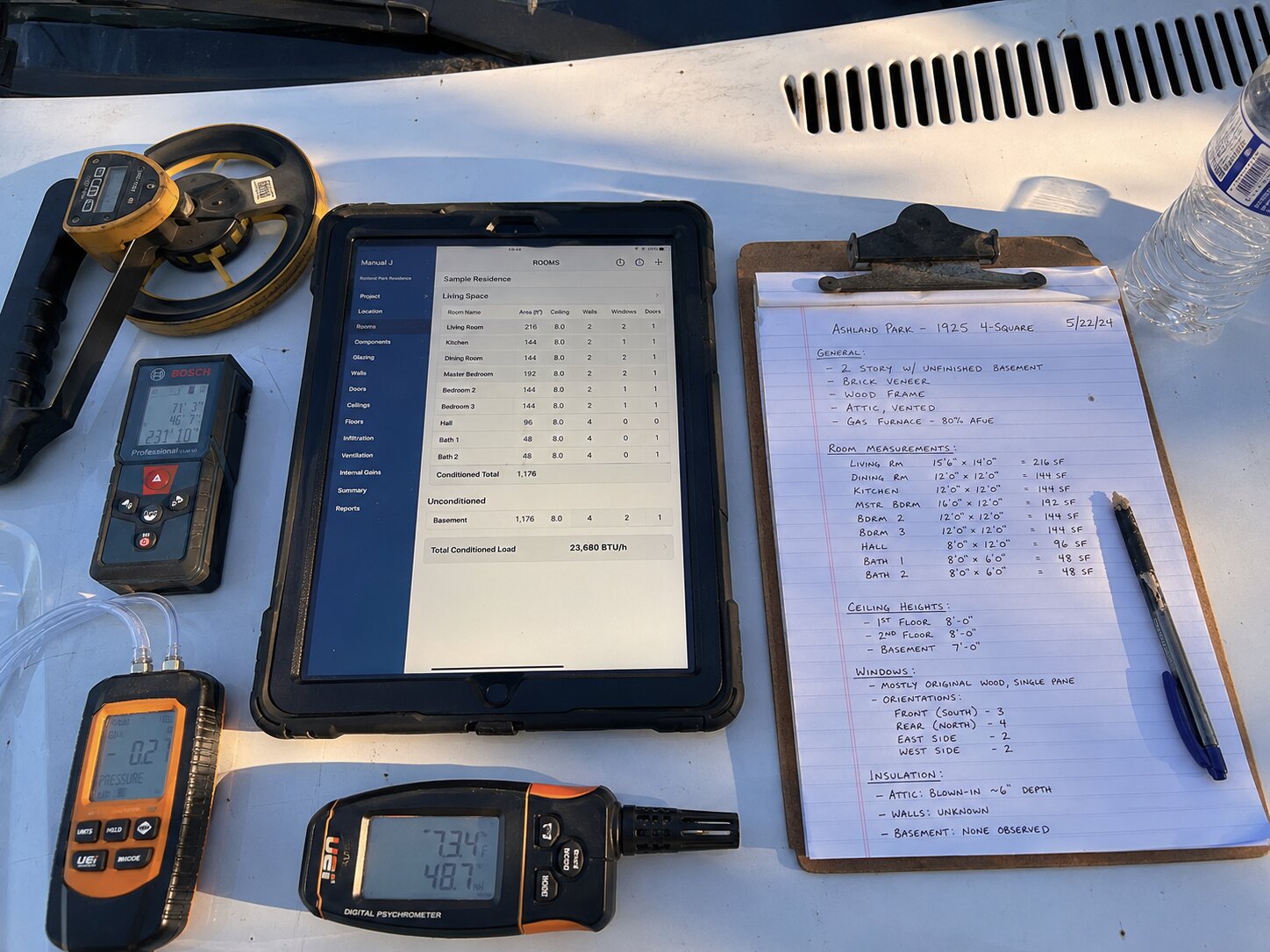
Most contractors don’t do this work, particularly on residential calls, because it takes longer and doesn’t directly produce billable revenue. We do it because the cost of not doing it — oversized equipment that cycles short, undersized equipment that runs continuously, refrigerant charges set by feel rather than measurement, combustion adjustments that drift outside specification — gets paid by the homeowner over the next two decades in higher operating costs, shorter equipment life, and comfort problems no one ever traces back to the original installation.
When we quote work, the quote follows the measurements. When we recommend replacement, the recommendation follows the math. When we say a part needs to be replaced, we show you what the meter says about that part. The discipline is what makes the difference, not the discount.
Emergency HVAC: Honest Triage, Realistic Timing
A no-heat call on a 12°F Tuesday night in January is not the same as a no-heat call on a 58°F Saturday afternoon in October. Knowing which is which — and dispatching accordingly — is part of what an emergency HVAC service actually does. We’ll triage on the phone before the truck rolls. If your situation can safely wait until first-available, we’ll tell you so and skip the inflated after-hours dispatch fee. If it can’t, we’ll give you a realistic response window factoring the queue, not a 30-minute promise we can’t deliver.
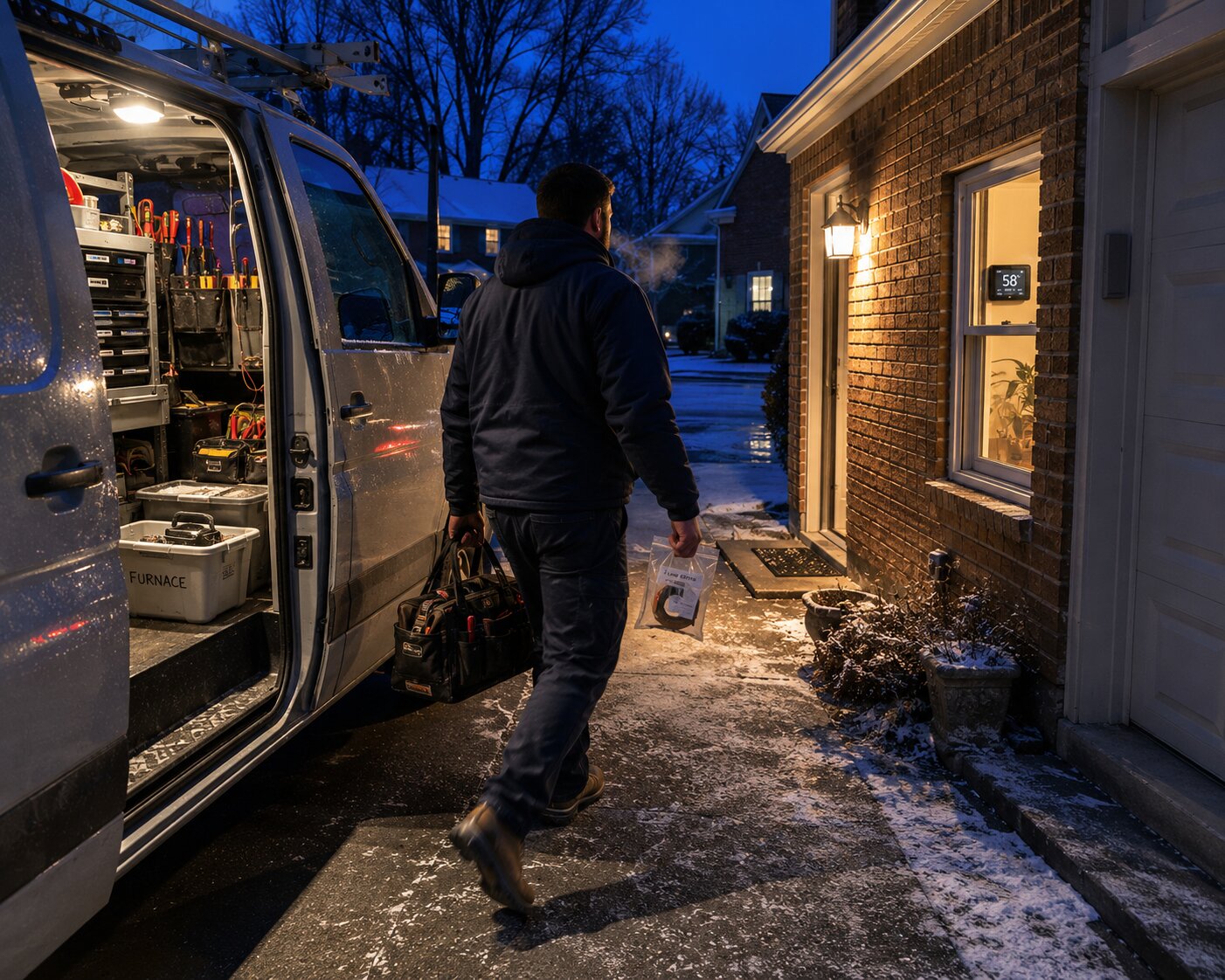
Priority on real safety conditions: active gas smell, CO detector alarming, visible electrical damage, smoke. Those get priority over routine no-heat or no-cool calls. Vulnerable household situations (small children, elderly residents, household members with medical conditions) get priority over equivalent calls with healthy adult-only households. Existing maintenance-plan customers get queue priority during peak demand, which is one of the practical reasons the maintenance relationship matters.
For active gas leaks or CO alarms with occupants inside, call emergency services first. We’re not the right resource for the first few minutes of a genuine life-safety emergency. We’re the right resource for the diagnostic and repair work after the immediate hazard is controlled.
Where We Work
Our primary service area is Lexington and all of Fayette County. We also serve Nicholasville (12 miles south, Jessamine County), Versailles (15 miles west, Woodford County), Georgetown (15 miles north, Scott County), Wilmore (18 miles south, Jessamine County), and Midway (15 miles west, Woodford County). Each community gets the same dispatch discipline, the same pricing, and the same measurement-first diagnostic approach we apply in Lexington proper. County-specific permitting handled where the work requires it — LFUCG in Fayette, Jessamine County in Nicholasville and Wilmore, Woodford County in Versailles and Midway, Scott County in Georgetown.
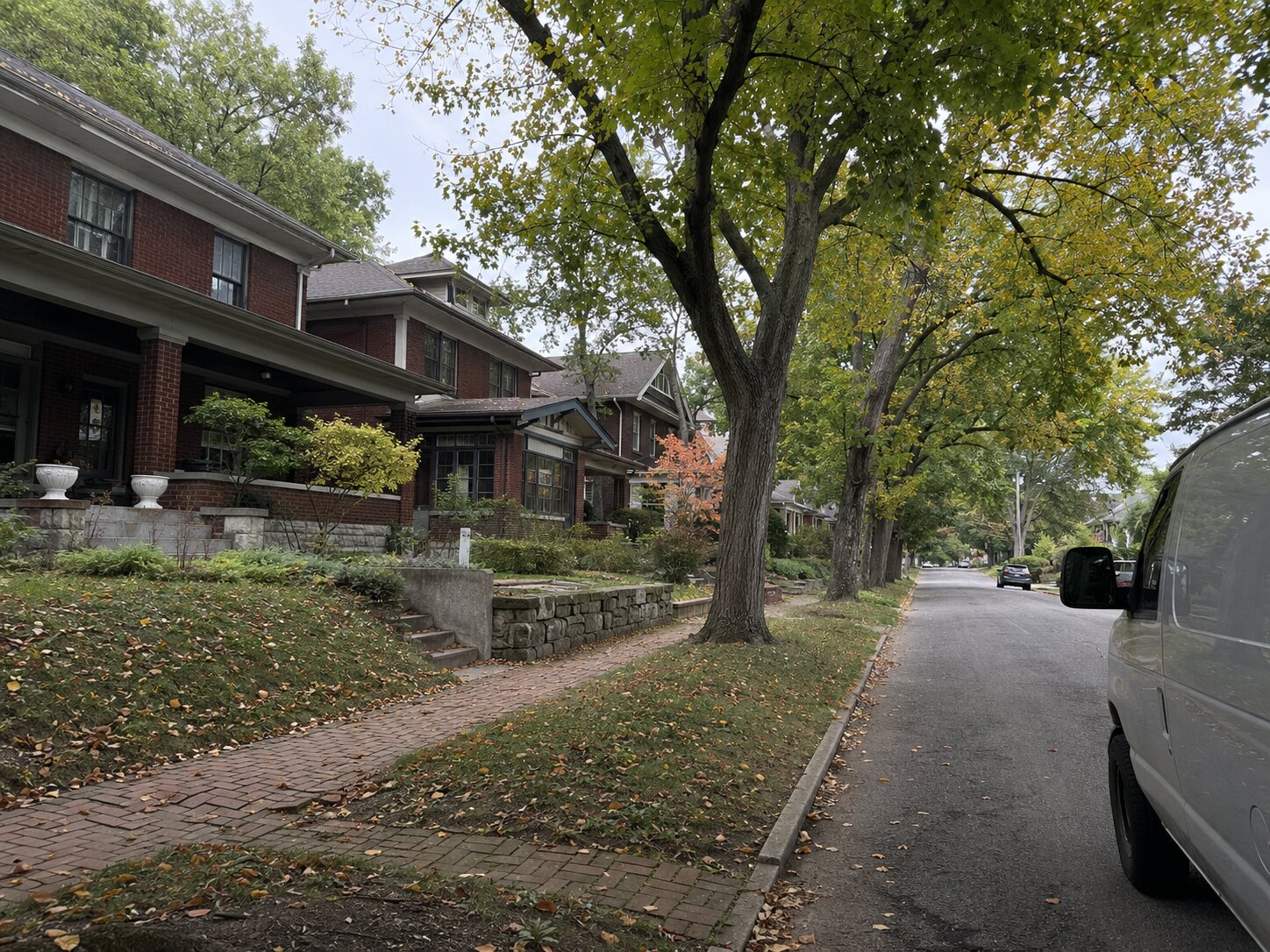
The radius isn’t an arbitrary marketing line on a map. It reflects the distance our trucks can reliably reach during emergencies, the geography our parts inventory and supplier relationships actually cover, and the regional climate, water chemistry, and building stock our experience speaks to specifically. If your address is in any of these communities, we serve you on the same standard. If you’re at the boundary or outside the primary area, call anyway — we’ll tell you straight whether we can serve you well or whether a closer-dispatch contractor would do better by you.
Licensed, Insured, and Local
Kentucky HVAC Contractor License through the Kentucky Heating, Ventilation and Air Conditioning Contractors Board. EPA Section 608 Universal certification for refrigerant handling. General liability and workers’ compensation insurance in force. Service vehicles based at 343 Cassidy Ave in Lexington, founded in 2015 to serve the Bluegrass region with the kind of diagnostic discipline most contractors don’t bring to residential work.
The licensing matters because it means the work is supervised by someone the state has verified knows what they’re doing. The insurance matters because if something goes wrong on your property, the recovery doesn’t depend on a handshake. The local part matters because we’re driving past the same job sites for years afterward, which is the strongest incentive a contractor has to do the work right the first time.
Frequently Asked Questions
- What does an HVAC service call typically cost in Lexington?
- Diagnostic charges vary by service type and timing (standard hours vs. after-hours) and are quoted upfront when you call so you know the entry cost before we arrive. Repair work is itemized after diagnosis. For installation work, we provide written estimates after Manual J load calculation and equipment assessment, with itemized scope including equipment, labor, refrigerant, electrical, permits, and commissioning.
- Do you handle permits and inspections?
- Yes. Major HVAC installations in Lexington require permits through the LFUCG Division of Building Inspection. Surrounding counties have their own permitting processes (Jessamine County, Woodford County, Scott County). We pull permits where required, arrange inspection, and document approval as part of the work. The permit cost is itemized in your estimate so you see what’s going to the city versus to us.
- How does the Section 25C tax credit work on HVAC installations?
- Qualifying high-efficiency equipment installations (particularly heat pumps and 95%+ AFUE furnaces meeting current thresholds) are eligible for federal tax credit under Section 25C, subject to annual limits and IRS rules. We provide equipment specifications, AHRI matchup documentation, and other manufacturer documentation that supports your tax filing. Confirm specific eligibility and credit amounts with your tax professional — that’s the appropriate authority on tax matters rather than a contractor’s interpretation.
- Are you available for emergency calls?
- Yes. We dispatch emergency calls and triage on the phone before the truck rolls. For genuine emergencies (no heat in cold weather with vulnerable household members, no cooling during heat advisory, gas smell, CO detector alarming) we dispatch as quickly as the queue allows with realistic time estimates. For situations that can safely wait, we tell you so and skip the inflated dispatch fee. Active gas leaks or CO alarms with occupants inside: call emergency services first.
- What’s the difference between a contractor who measures and one who doesn’t?
- Long-term operating cost, equipment lifespan, comfort consistency, and whether you needed the work you were sold. A contractor who quotes replacement without doing combustion analysis on the existing equipment can be wrong about whether replacement is necessary. A contractor who installs new equipment without Manual J load calculation routinely oversizes by 30%+, producing short-cycling, comfort problems, and shortened equipment life. A contractor who tops off refrigerant without finding the leak source produces a recurring cost that compounds annually. The measurements take time and require equipment; they’re the difference between work that performs to specification and work that struggles for years while no one traces the problems back to the original installation.
Schedule a Service Call or Installation Assessment
For service calls, we triage on the phone and dispatch with realistic timing. For installation assessments, the conversation starts with a walk-through, Manual J load calculation, and itemized written estimate — not with equipment recommendations before we’ve seen the home. Across Lexington and the surrounding Bluegrass communities.
- Phone: (859) 215-5241
- Address: 343 Cassidy Ave, Lexington, KY 40502
- Email: [add business email before publishing]